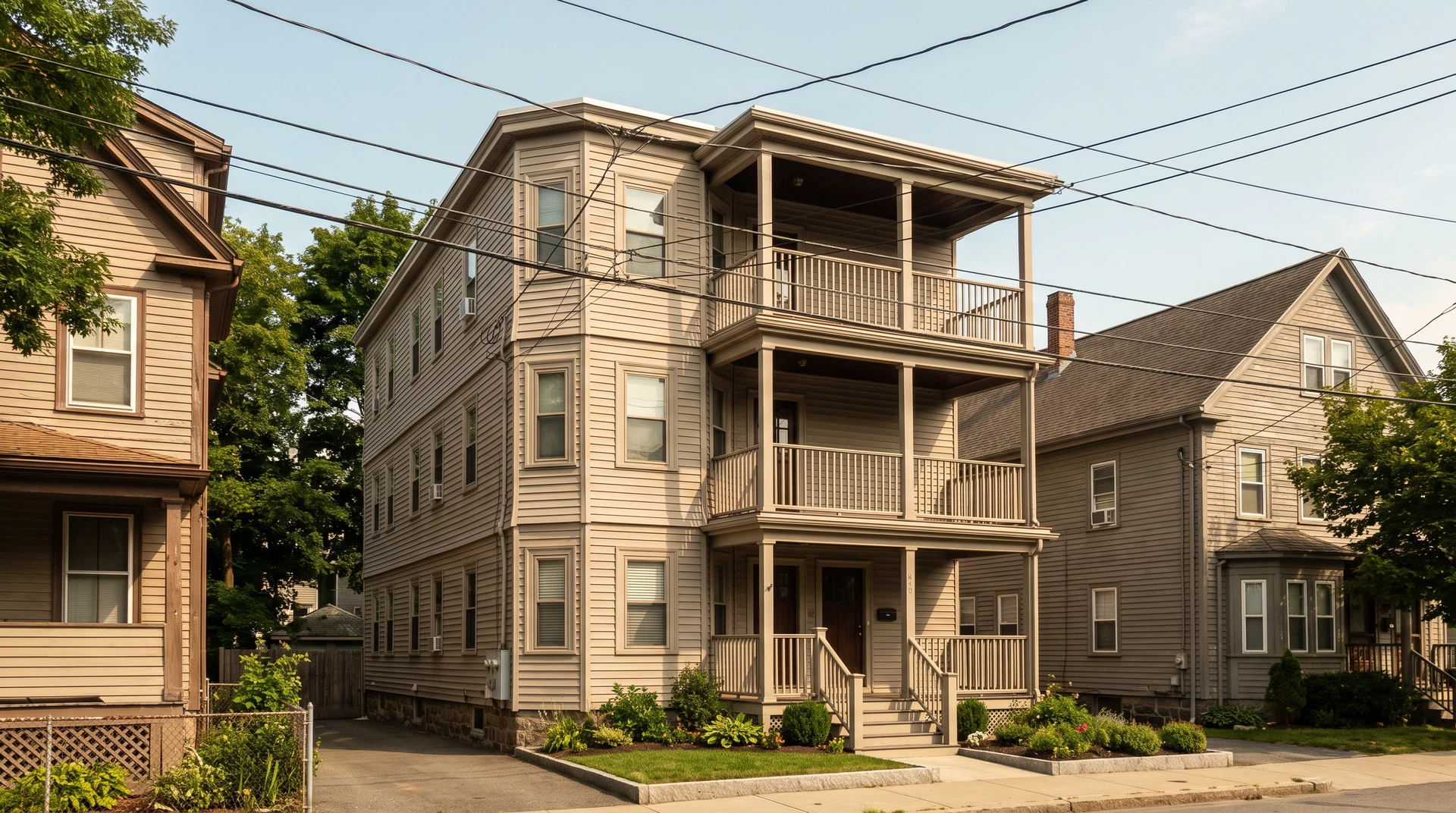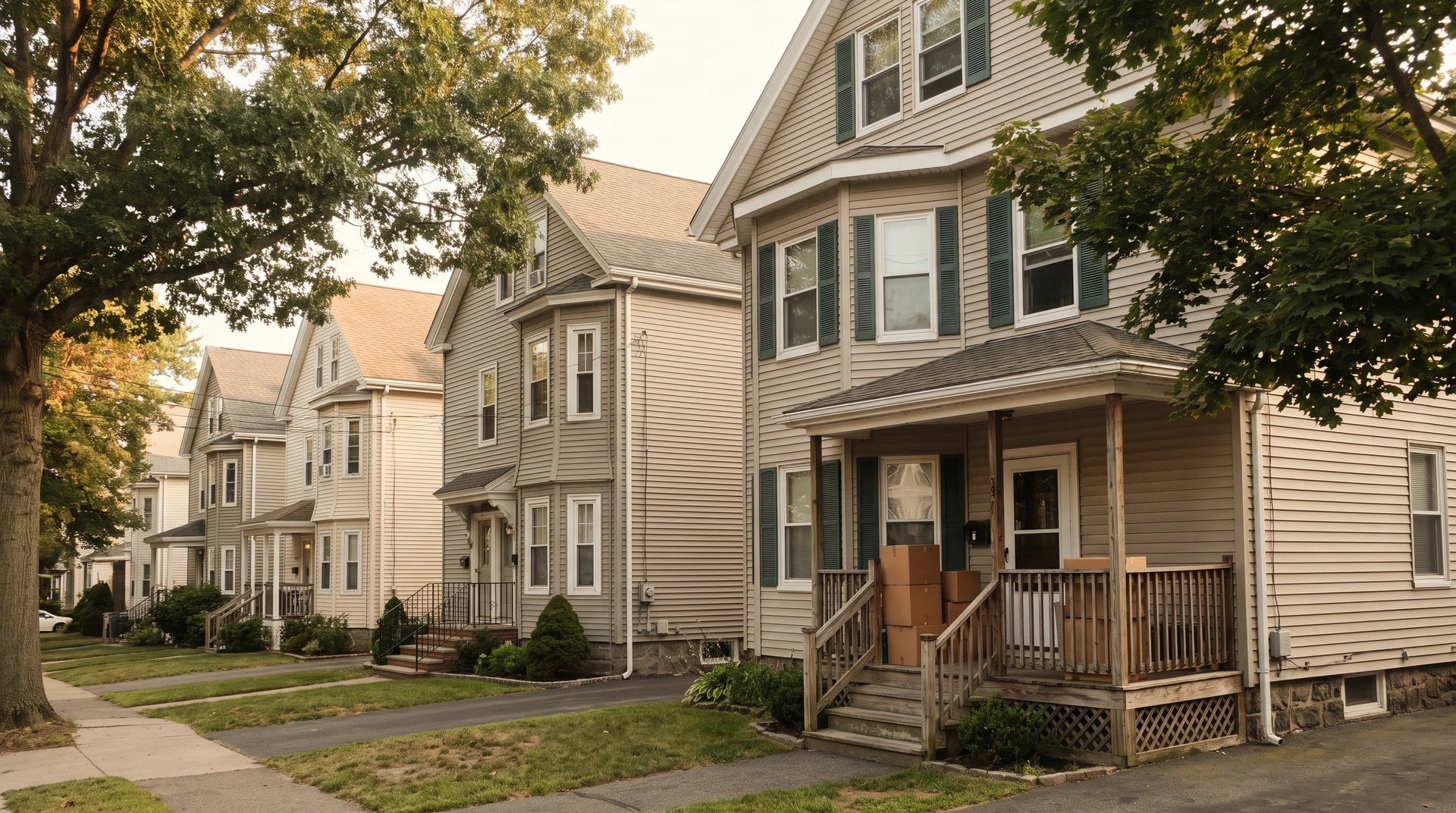
If you have ever wondered why every moving truck in Greater Boston seems to be on the road at the same time, the answer is September 1. Commonly estimated at about 70 percent, the majority of leases in Boston proper start on September 1 and end on August 31, a cycle built decades ago around the academic calendar. Quincy is not a college town, and its leases are more spread out across the year, but the September 1 wave still pulls on this market. It shapes when inventory appears, how fast units lease, and what they cost. If you are renting in Quincy this fall, or you own rental property here, the next few weeks are the most important stretch of the rental year.
Here is an honest look at how the cycle works, how much of it actually reaches Quincy, and what both sides of the lease should be doing right now.
What Is the September 1 Cycle, Exactly?
Greater Boston runs on an unusual rental clock. Because the region's universities bring in tens of thousands of students every fall, landlords in Boston, Cambridge, and Somerville long ago aligned their leases with the school year. The result is a market where the majority of leases in Boston proper turn over on a single day. Locals call the chaos of August 31 and September 1 "Allston Christmas," after the piles of discarded furniture that appear on curbs in the city's biggest student neighborhood.
That single-day turnover creates a predictable seasonal rhythm across the whole metro. Inventory for September 1 move-ins starts appearing in spring, peaks through the summer, and gets picked over by August. Pricing follows the same curve. Summer is when landlords have the most leverage, and late fall through winter is when renters do.
Does Quincy Actually Run on September 1?
Partly, and this is worth understanding if you are searching here. Quincy's renter pool leans toward commuters, working households, and people priced out of Boston proper rather than undergraduates, so leases here start in every month of the year. You will find plenty of October 1, December 1, and March 1 leases in Quincy, which is much less true in Allston or Mission Hill.
But Quincy does not escape the cycle. Three forces connect this market to September 1. First, in my experience a steady stream of Quincy renters are arriving from Boston, Cambridge, or Somerville, where their old lease ends August 31, so their search calendar is set by the Boston cycle even if their new Quincy lease is not. Second, the large professionally managed buildings near the Red Line tend to see their heaviest leasing traffic in summer and early fall, and price accordingly. Third, landlords here often steer lease end dates toward late spring and summer on renewal, because nobody wants to fill a vacancy in January.
The practical translation: Quincy in August is a competitive, fast-moving rental market with more selection than midwinter, but also more competition for every good unit.
Where Quincy Rents Sit Right Now
Depending on the source, current reporting puts Quincy's average or median rent roughly between $2,300 and $2,800 a month as of mid-2026, with Apartment List's median around $2,311 and down slightly year over year, Apartments.com around $2,544, Zillow around $2,595, and Zumper around $2,760. The spread is real, because each provider measures a different pool of listings and methodology. As typical asking ranges from current listing sites, a one-bedroom runs roughly $2,100 to $2,700 and a two-bedroom roughly $2,600 to $3,300, with older units in the neighborhoods below those ranges and newer buildings near the T often well above them.
The market remains tight. Boston Pads put Quincy's real-time vacancy rate at about 1.97 percent in July 2026, up from under half a percent a year earlier as new buildings add supply, but still well below the 5 to 7 percent usually considered balanced. Well-priced units typically lease in a matter of weeks. That is the backdrop for everything below.
The Renter's Timeline for a September 1 Move
| Timing | What the market looks like |
|---|---|
| 90+ days out (May-June) | The big managed buildings post September 1 availability early. Most selection for new construction, least for small landlords. |
| 60 days out (early July) | Peak listing season. Small landlords and two-family owners list once current tenants give notice. Strongest overall selection. |
| 30 days out (early August) | Inventory is picked over but real. Good units still appear as plans change. Be ready to decide within a day or two. |
| After September 1 | Competition drops noticeably. Remaining landlords get more flexible on price and start date. Fewer choices, better leverage. |
If you are reading this in early August with a September 1 target, you are late-cycle but not out of luck. Have your documents ready before you tour: photo ID, recent pay stubs or proof of income, a credit report if you have one, and references. In this market, the renter who can apply the same day usually beats the renter who needs a week.
What You Can Legally Be Charged in Massachusetts
This is where Massachusetts renters have more protection than most, and where the rules changed recently.
Under Massachusetts law, a landlord may require only first month's rent, last month's rent, a security deposit of up to one month's rent, and the actual cost of changing a lock. Application fees, pet deposits, move-in fees, and background or credit check fees are not permitted charges when imposed by the landlord.
The bigger recent change is broker fees. As of August 1, 2025, Massachusetts law requires the party who hires the broker to pay the broker's fee. A landlord who lists a unit through a broker can no longer pass that fee to the tenant. You only owe a broker fee if you yourself hired a broker to search on your behalf, and brokers must give you a fee disclosure form before working with you. For a typical Quincy two-bedroom, that change can keep roughly $2,600 to $3,300 in a renter's pocket at move-in. Violations can carry serious penalties under the state consumer protection law, so listings still advertising a tenant-paid fee are worth questioning.
Security deposits come with their own rulebook: the deposit must be held in a separate interest-bearing Massachusetts account, you are entitled to a receipt, a statement of condition must be provided within 10 days after your tenancy begins or when the deposit is received, and the deposit must be returned within 30 days after the tenancy ends, with an itemized accounting if any deductions are made. In my experience, some smaller landlords skip the deposit entirely rather than manage that compliance, which is part of why you will see Quincy listings asking only first and last.
What Landlords and Investors Should Take From the Cycle
If you own rental property in Quincy, the calendar is a tool. A few ways to use it.
Steer your lease end dates toward the strong season. A lease ending May 31 through September 30 puts your vacancy into the deepest pool of renters. A lease ending in December puts you into the thinnest. When a tenant asks for an odd-length renewal, it is often worth accepting, or even proposing, a term that lands the next turnover in summer.
Price to the season, not to the peak. The same unit commands more attention in July than in November. If you are listing late in the cycle, price realistically for the smaller audience instead of anchoring to what a similar unit fetched at midsummer.
Budget the broker fee into your numbers. Since the party who hires the broker pays, a landlord using a listing broker should now plan for that cost, typically up to one month's rent, in the year's underwriting, or handle the listing and screening directly.
Do not let compliance be an afterthought. September turnovers cluster inspections, deposits, and condition statements into a single busy week. The deposit rules above carry real penalties for mistakes, and Quincy requires working smoke and carbon monoxide detectors in rentals like everywhere in Massachusetts. Build the checklist before the truck arrives.
The Bottom Line
September 1 is Greater Boston's rental heartbeat, and while Quincy keeps its own rhythm, the pulse reaches here every summer. For renters, early August is late in the cycle but workable if you move decisively, and the leverage swings your way once the wave passes. For landlords and investors, the cycle is a scheduling tool: land your turnovers in the strong season, price to the moment, and keep the Massachusetts rulebook tight. And for anyone weighing whether to keep renting in Quincy or start owning here, the two markets are more connected than they look. Strong rents are part of what makes Quincy multi-families work as investments, and today's renters near the Red Line are often next year's first-time buyers.
Thinking about what Quincy's rental market means for your own next move, whether that is renting smarter, buying your first multi-family, or timing a turnover? Reach out through the contact page and let's talk through your numbers.
FAQ
Common questions, answered.
Do most Quincy apartments start leases on September 1?
No. Boston proper is where the September 1 cycle dominates. Quincy leases start throughout the year, though summer and early fall are the busiest leasing season here, and many landlords steer renewals toward summer end dates.
When is the cheapest time to rent in Quincy?
Late fall through winter generally offers the most negotiating room, because fewer renters are searching and landlords want to avoid extended winter vacancies. The trade-off is thinner selection.
Do I have to pay a broker fee to rent in Quincy in 2026?
Only if you hired the broker yourself. Since August 1, 2025, Massachusetts law puts the broker's fee on the party who engaged the broker, which in most listings is the landlord. Brokers must provide a fee disclosure form before working with you.
How much money do I need up front to rent in Massachusetts?
At most, first month's rent, last month's rent, a security deposit of up to one month's rent, and the actual cost of changing the lock. Many landlords ask for less than the full stack. Other move-in charges imposed by a landlord are not permitted under state law.
Is the September 1 cycle good or bad for Quincy investors?
Mostly good, if you plan around it. It concentrates the deepest renter demand into a predictable season, which shortens vacancies for landlords who time their turnovers well. The main risk is landing an off-season vacancy, which is a pricing and patience problem rather than a dealbreaker.
Monthly Market Recap
Get the Greater Boston market recap, once a month.
Prices, inventory, and what it actually means for buyers and sellers around Quincy and the South Shore.